Oops, All Eyebrows!
a triumvirate of wounds
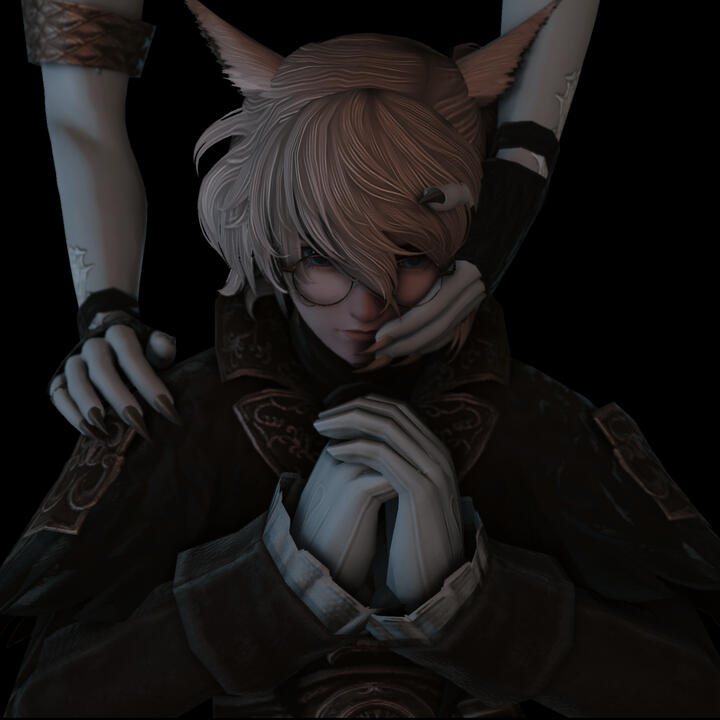
▍ SOLOMON the GOLD, DEMONOLOGIST ♂
Vylbrandian miqo'te. Knight Philosophus to an esoteric order of occultists, childhood war-trauma survivor, curious but conscientious demonologist.
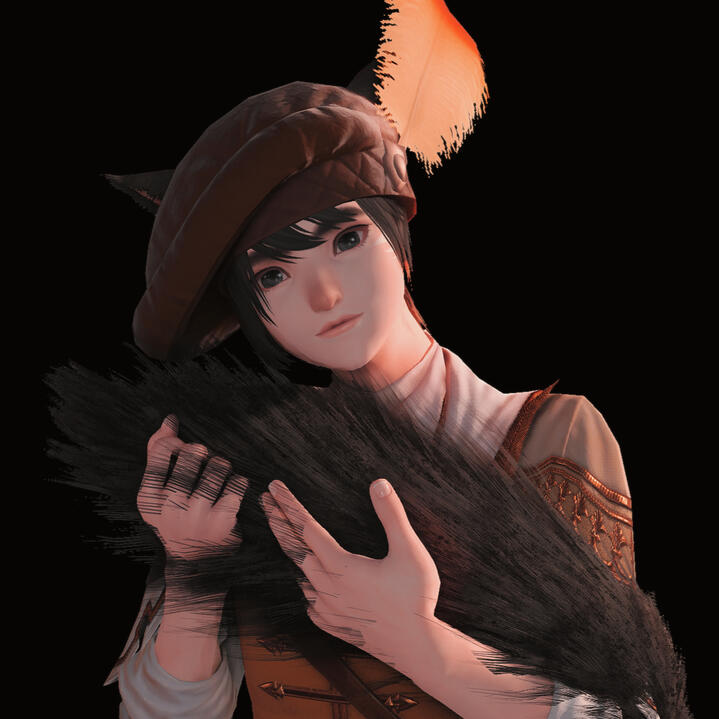
▍ ADALWOLF the BLACK, CURSED KNIGHT ♂
Coerthan miqo'te. Witchknight & ealdorman's son. A lionhearted boy, raised by bears, cursed by wolves, and who would one day be a hero. If the world doesn't eat him alive.
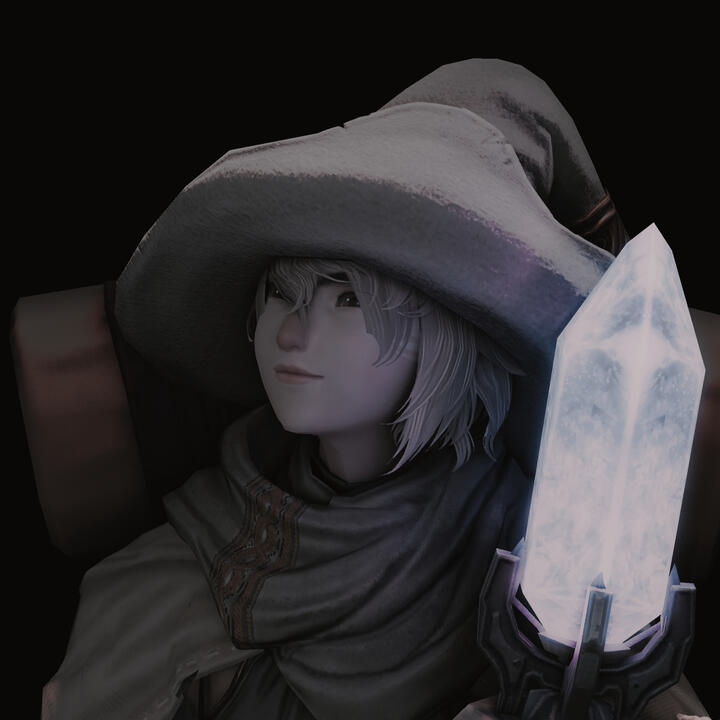
▍ QIQYAT the HORSEFLY, WITCHLING ♂
Twelveswood miqo'te. The (ex?) apprentice of a witch mysteriously missing, gone wandering to look for her in the wider world, absolutely won't be back by supper.
And a Pentagram of Witches
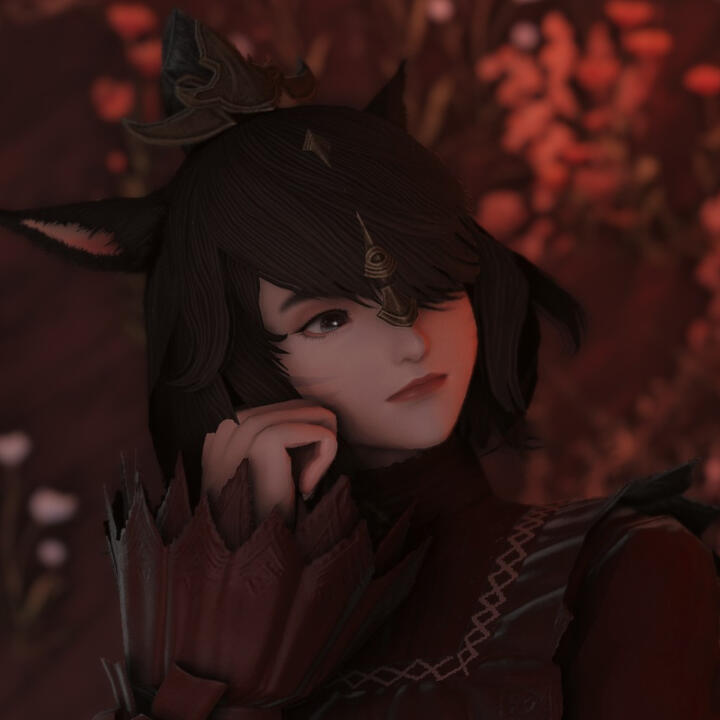
▍ EMILY FALKE, SEA-WITCH & PROPER ♀
Vylbrandian miqo'te. Ship captain of the HMS Dandelion; representative of the Worshipful Company of Tidewrights; Honourable Miss & Vylbrandian sea-witch. Proper & polite.
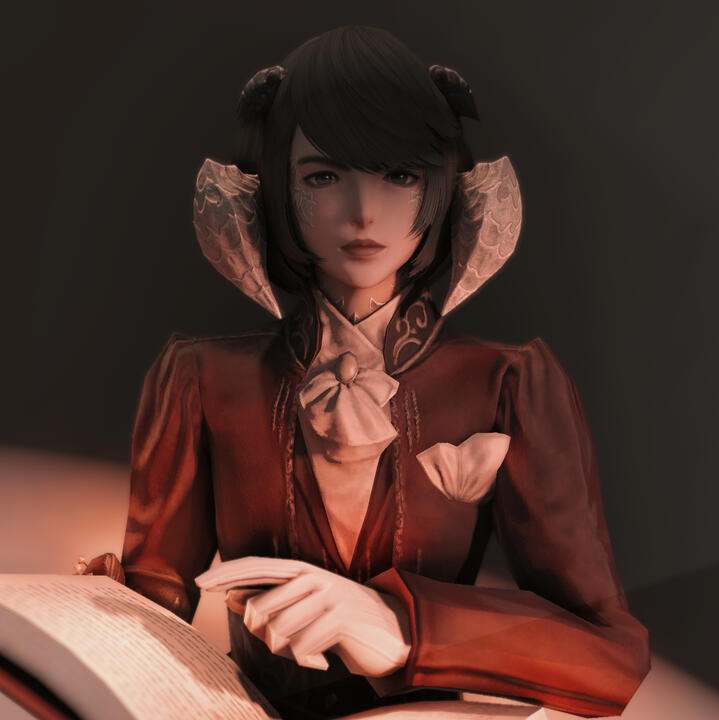
▍ ADELINE CROWE, OCCULT FIXER ♀
Ilsabardian raen. A regency-styled occultist, fixer, and blackbagger for a hermetic order of esoteric magi. Ilsabardian immigrant. Professional, firm, relentless.
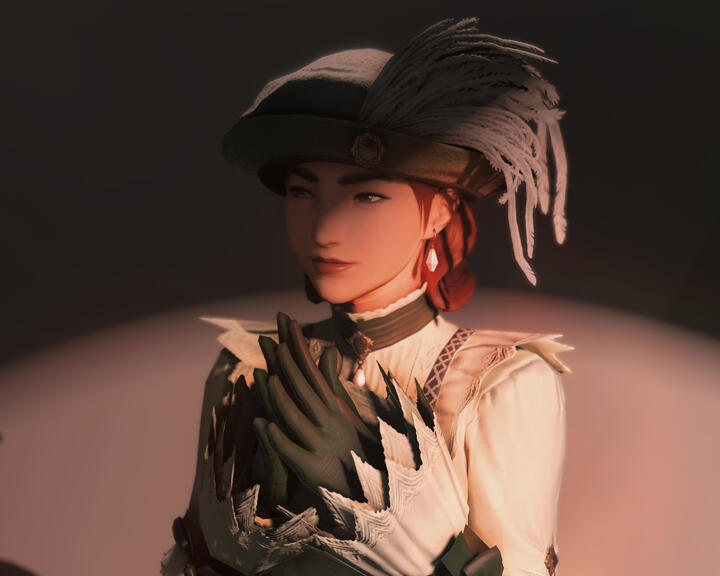
▍ OTTILIA von TROSBERG, ELECTOR-PRINCE ♀
Dravanian hyur. A lady of the Marches and Hochbern Estates. Heir to the duchess & elector-prince seat of Trosberg. Heavy Dravanian headcanon of petty states, dwindling glory, and dragon-blooded sorcerers.
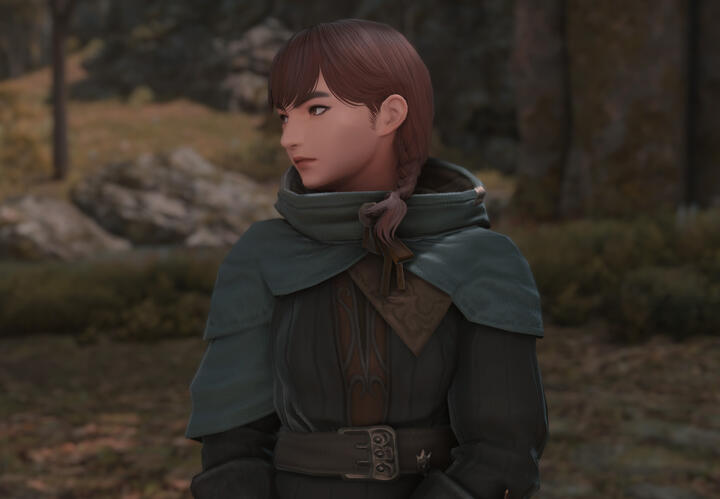
▍ ESTHER of BARSHAM, PSYCHOPOMP ♀
Twelveswood hyur. Sickle-Sister from the Gentle Ministers of Thal’s Lantern and the Green Halls of Barsham. Monastic psychopomp that cleans tombs and guides the restless dead back to the Wheel. Shrewd, dutiful, repressed.
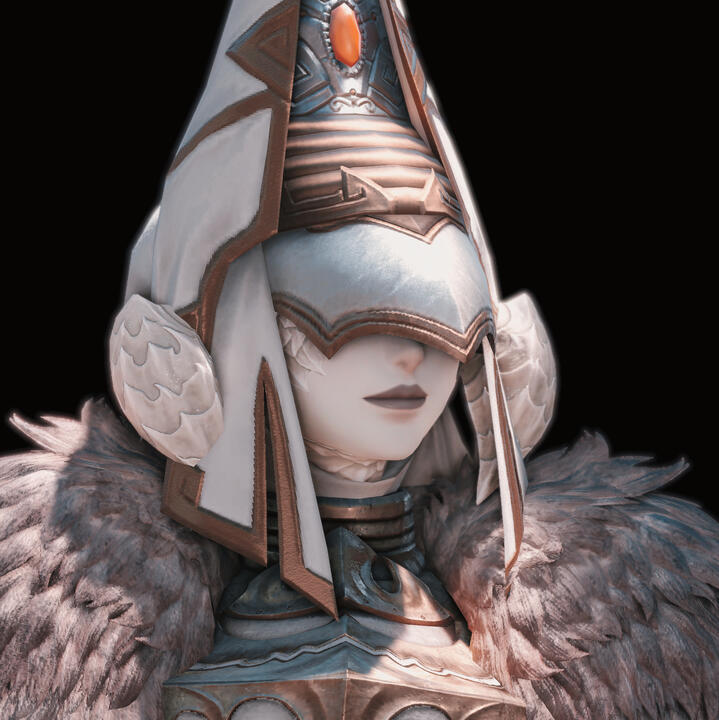
▍ ANKHESEN, COURT MAGE & PRIESTESS ♀
Ul'dahn raen. On loan from the Cult of Nald & Thal to advise the Divan of Law and carry out their will abroad. Corrupt, cruel, and unexpectedly maternal.
A Trio of Uncertainties
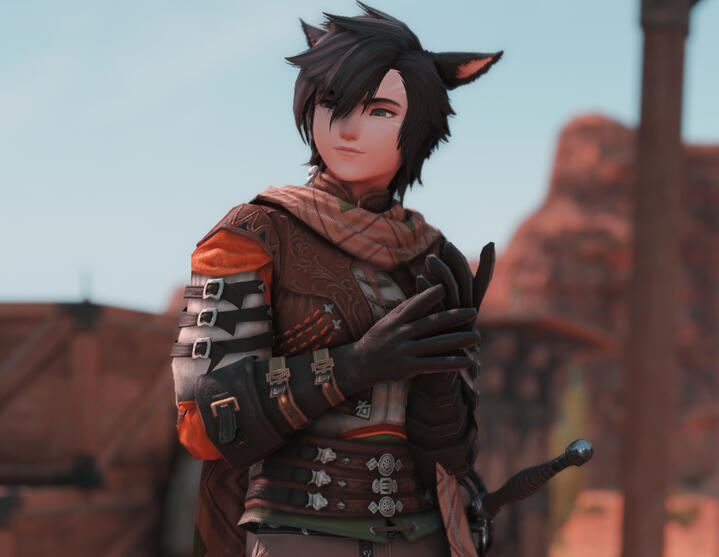
▍ NIDA'LI QENWA, PROFESSIONAL RASCAL ♂
Twelveswood miqo'te. Itinerant worker, professional rascal, and odd jobs enthusiast who decided to pack it up and head for greener pastures... in the desert, no less. Self-serving & playful.
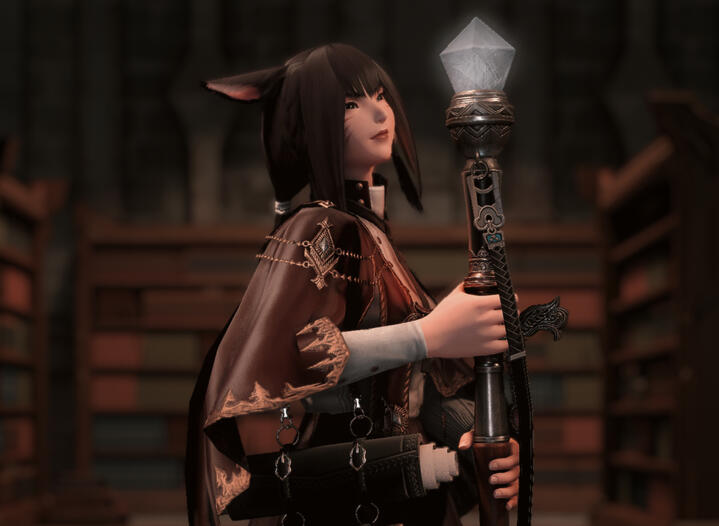
▍ MEHRI IMASHA, COURT MAGE UNDERSTUDY ♀
Vylbrandian miqo'te. Graduated arcanima student representative from the admiralty academy of arcanima & natural philosophy. A little collectivist, a little authoritarian, closeted gay.
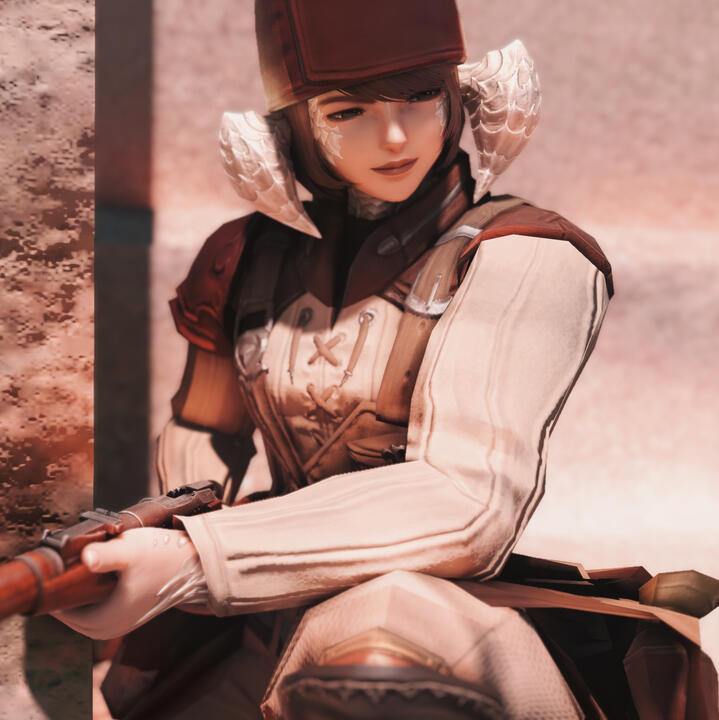
▍ MERYEM HALILOVIĆ, ESCHVAN REFUGEE ♀
Bozjan-Eschvan raen. 'Refugee' & trade factor. From girl to cossack to spy to question mark; a thousand miles from a home that hasn't been home since before she was born. Dutiful, melancholic, alcoholic.
And a Quartet of 'Others'
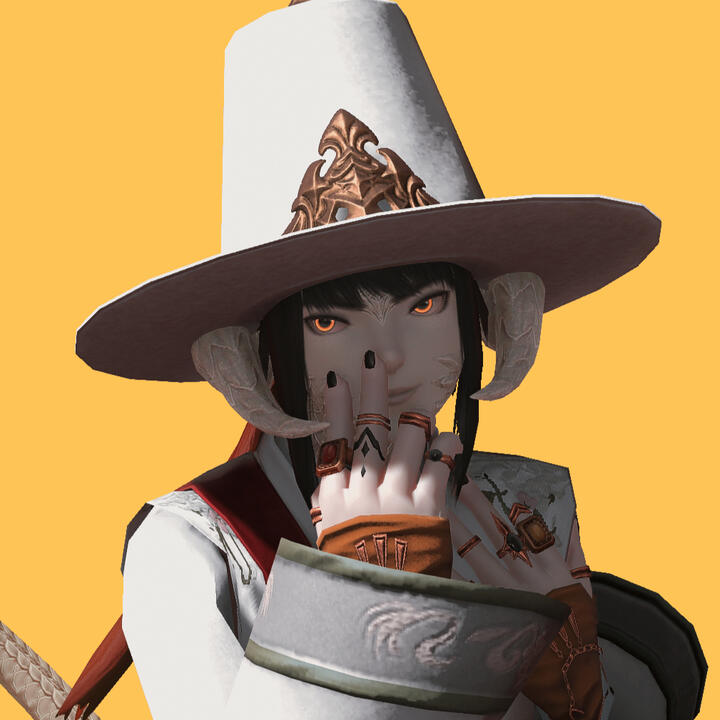
▍ 'ZHANG SAN', MERRY MANDARIN? ♂
Fanged Crescent (?) raen. He works for the capital, he says; just a low court official, don’t mind him; a simple bureaucrat, nothing more; but a capital of where, court of whom, and bureaucrat of what? Otherworldly, corrupting.
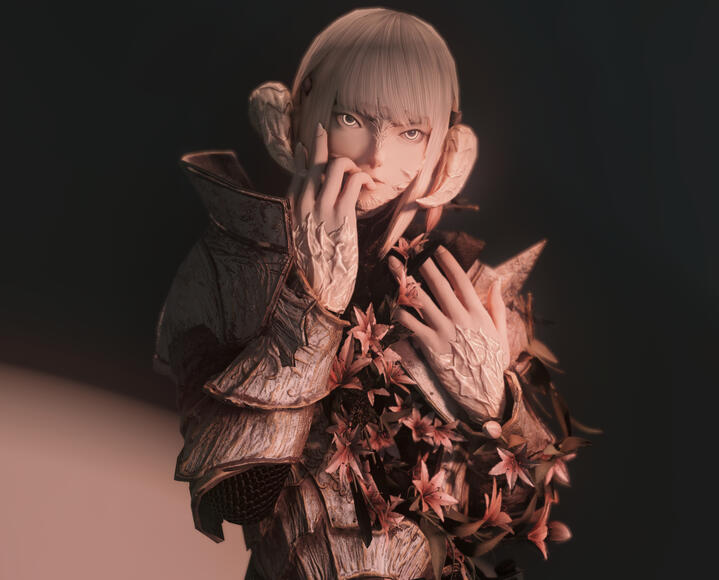
▍ ISHME-ANU ILU, AMDAPORI GOLEM ♂
An Amdapori killing machine, a golem searching for meaning, or a robot that just wants kith? Predator posing as a housepet. Charming, obsessive, cruel.
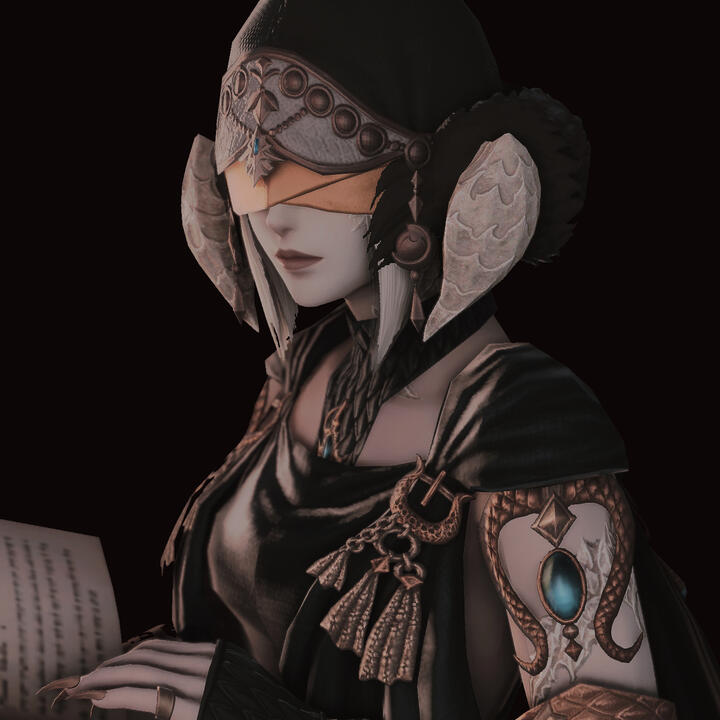
▍ MOUTH MAERWYN, ??? ♀
Prophetess or apostate. Sisyphean & tragic. "That's a question of mirrors, of labyrinths, of forks in the road and trapeze swingers and snakes chasing their own tails."
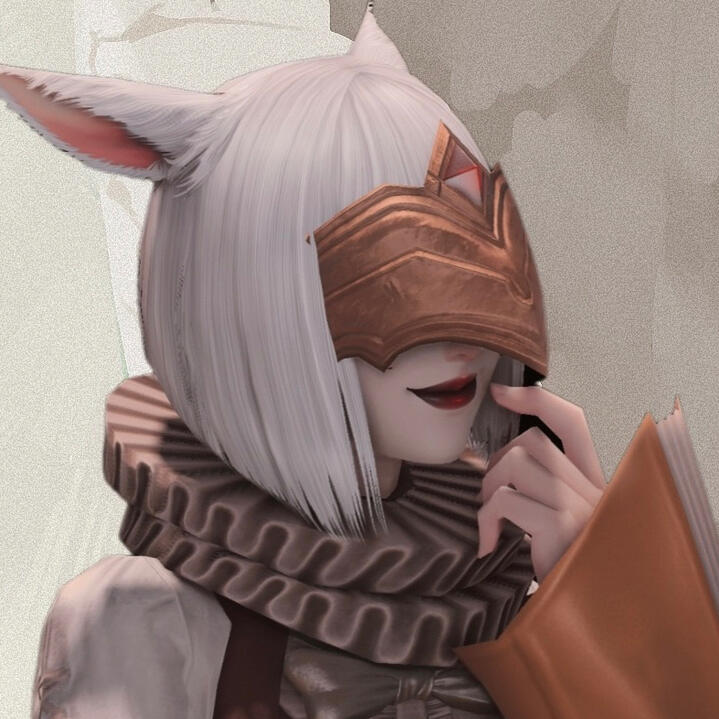
▍ ’LURIO LARK’, A MOST TERRIBLE CLOWN? ♂
Miqo’te of elsewhere. An artist, a madman, or someone (something) aching to see the real you? Beneath all that makeup and polish. That carapace, peeled back.
Headcanon & Worldbuilding
the miqo'te of the kokkish diaspora
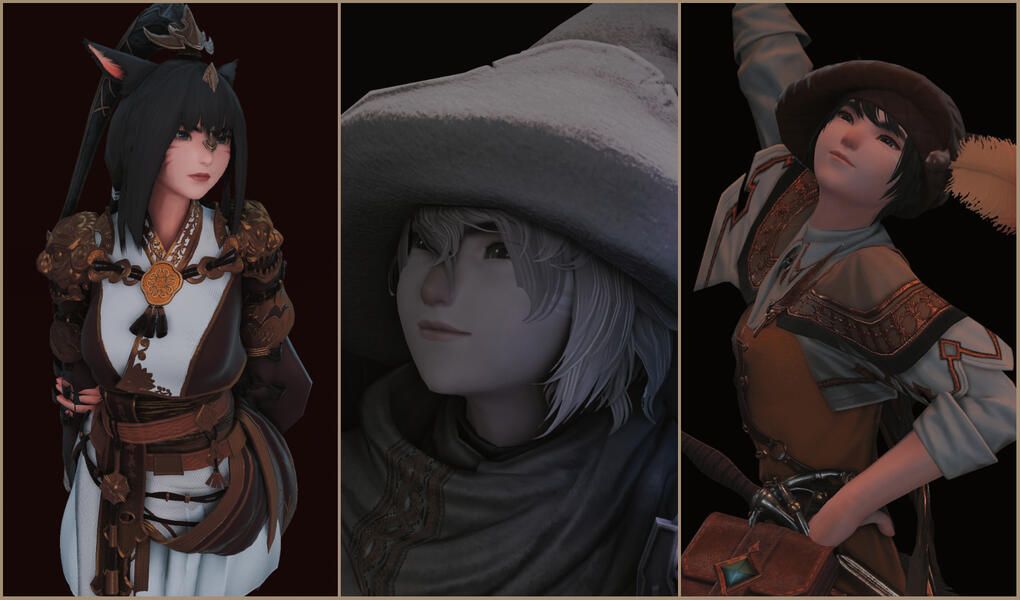
A truncated, biased ethnography (with some biological elements) involving the Kokkish ethnic group that most of my miqo’te belong to. This is a work of headcanon and a constant work-in-progress. As with all ethnographies, none of these are hard-and-fast or part of an exact science (besides maybe the curse stuff, who knows). Sort of an excuse for me to beat certain themes to death: magical addiction, emotional intensity, and really cute female model males! Oh, I'm also not a fan of normal miqo'te names.
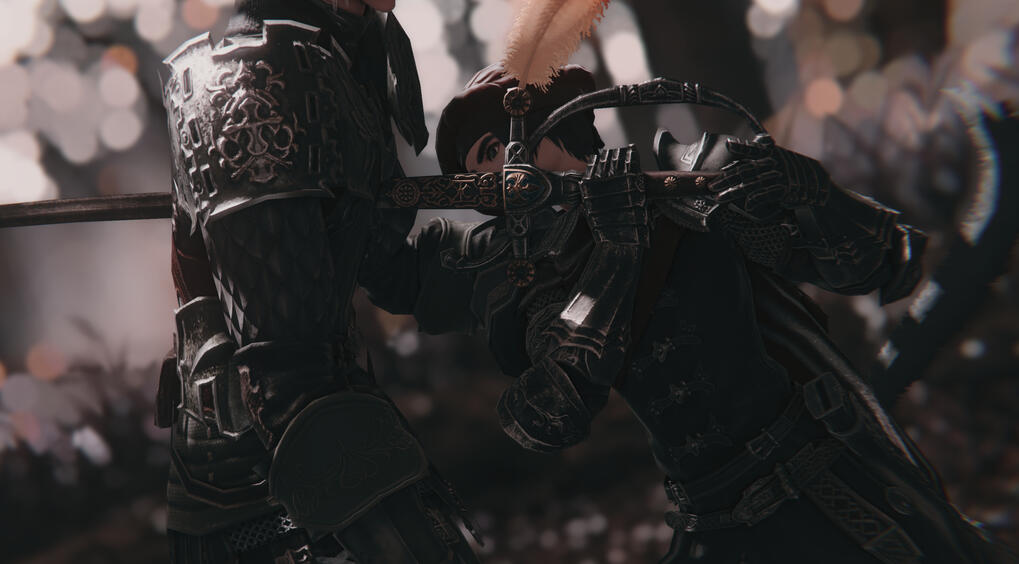
The Marches, referred to in official documents as the Marches of East Dravania and the Hochbern Estates, are less a single nation and more a shifting mosaic of elector-princes and prince-bishops, matriarchal duchies and borderland baronies, stitched together by a complex web of oaths, treaties, customs, ceremonies, and handshake-agreements. It has that distinctly-fractured 'Holy Roman Empire' energy mixed with a bit of dragon worship and my wish that Square Enix cared more about cultural worldbuilding.
the drowning guildmasters of bellegrada
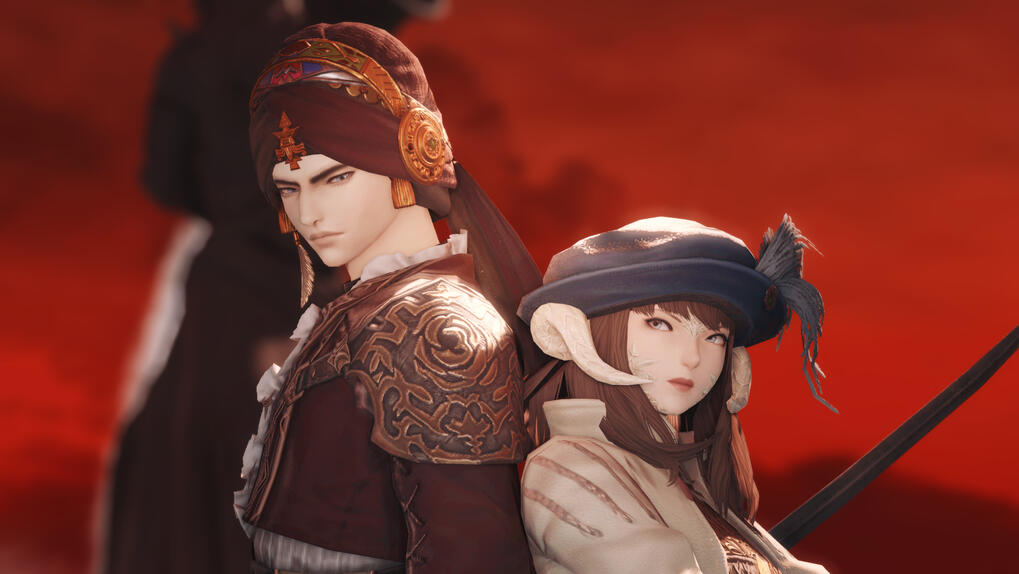
Once a Vylbrandian principality spanning the island city-states and shores of the eastern Sellsword Coast (so named for the many mercenaries drawn there by its proximity to Aldenard, where 'oh, there's always some war being fought on the mainland'), the Kingdom of Bellegrada was torn apart by a bitter war for succession that left it unable to impose authority over its neighbours. In its modern form, however, the seven districts of the sprawling, seaside metropolis and the Signoria of Guildmasters that rules over it have regained some level of prosperity, and host all manner of trade by ship or cart, even as rising water levels claim precious inches every decade.
External Carrds
the poor fellow-magi of oldcross house
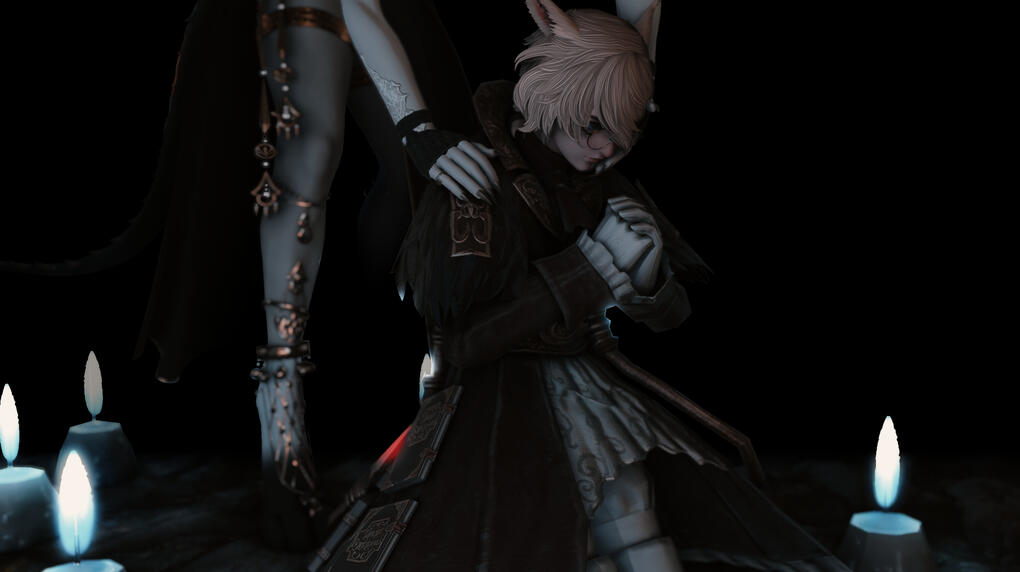
The Poor Fellow-Magi of St. Saerwyth & the Order at Oldcross House is a secret, (genderless) fraternal order, occult society, and quasi-knighthood of magi that takes inspiration from historical hermetic groups such as Aleister Crowley's Hermetic Order of the Golden Dawn. As a hallmark of occult orders and contrasted against the more modern, secular organisations of aetherology that one might find in the likes of Sharlayan, it retains a deeply-ceremonial, ritualistic sense of pageantry and tradition.
the admiralty academy of arcanima
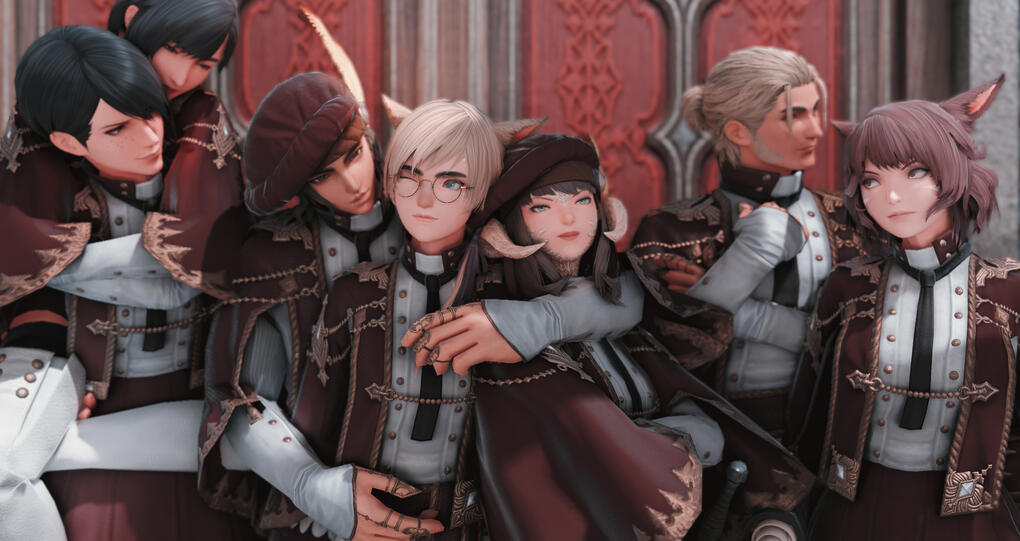
Located in one of Limsa Lominsa's more regal, imposing seastack-towers, the La Noscean Admiralty Academy of Arcanima & Natural Philosophy, commonly shortened to the Admiralty Academy of Arcanima or simply AAA ('Triple A') by its students, is a Lominsan institution of higher learning with close ties to the Admiralty's Navy, Mealvaan's Gate, and the Nymian Restoration Society. The wealthiest and most talented of Vylbrand's budding arcanists attend Triple A as a far more rigorous, prestigious, and thorough understanding of arcanima.
The Marches of East Dravania
And the Hochbern Estates
The Marches, referred to in official documents as the Marches of East Dravania and the Hochbern Estates, are less a single nation and more a confederation of fiefdoms - a shifting mosaic of elector-princes and prince-bishops, matriarchal duchies and borderland baronies - stitched together by a complex web of oaths, treaties, customs, ceremonies, and handshake-agreements. From the witch-proud marshlands of Schattenmark to the haunted valleys of Niederwiesen, each province enjoys near-total autonomy, answering only to the Imperial Steward (chosen by their own Electoral Diet), and often only in matters of war.The imperial heartlands lie nestled in the misty valleys and rugged foothills of the Dravanian interior, where smaller counties and free cities cluster around a ring of ancient duchies and abbacies known as the Hochbern Estates. A mix of secular and spiritual territories, each estate claims the middle slopes of its own culturally significant mountain, with many Hochbern rulers serving as clutch-wardens entrusted with guarding the eggs of lesser dragons in exchange for draconic patronage and protection. These same rulers — said to descend from the mythic offspring of Hraesvalgr and Shiva — wield considerable prestige and influence, and collectively hold five of the nine elector-prince seats tasked with selecting the next Imperial Steward from among their own ranks.
the breadbaskets and rittermarks of the frontier
The river-fed lowlands between Coerthas and Dravania are among the Marches’ few fertile stretches of land beyond its mountainous interior, making them both strategically-vital and precariously distant. After centuries of Ishgardian skirmishes and peasant uprisings, Imperial Steward Gregor von und zu Trosberg II — now six reigns past — proposed a solution: grant land and purpose to the empire’s declining class of free knights, and further secure their borders. These knights, beholden only to the Emperor and lacking liege-lords or estates, had long relied on war spoils to fund their obligations. In peacetime, many were forced into vassalage under lesser lords, eroding their status and sparking more than one armed rebellion. To resolve agricultural uncertainty and knightly unrest, Gregor secured electoral approval to establish two frontier provinces under imperial charter: The Imperial Rittermark of Eisenhauch, governed by the Poor Seraph-Soldiers of the Sickle and the Imperial Hall of Eisenhauch and
The Imperial Rittermark of Fahlburg-Hohenwald, governed by the Aneskan Order of Friar-Knights at Hohenwald PrioryEach order was granted administrative and organisational autonomy, including the right to tithe 5% of crop yields from neighboring breadbasket provinces in exchange for maintaining order, defending the border, and managing grain shipments to the imperial heartland. Initially a success, this solution has proven increasingly problematic in recent years with the Rittermarks realising both their military capabilities and the interior’s dependence on them. Petty ‘robber-baron’ corruption continues to rise every year while leadership remains more concerned with devising new ways to leverage their position against the other provinces in the imperial courts. Coincidentally, the province of Trosberg seems to be doing fine…
Of the Provinces
the imperial rittermark of fahlburg-hohenwald
"His High Princely Grace, Kasimir von und zu Hohenwald, Margrave & Warden of the Imperial Rittenmark of Hohenwald-Fahlburg, Grandmaster of the Aneskan Order of Friar-Knights, Staghound of the Reaches, Sorcerer-Lord & Elector-Prince of the Marches."
A densely forested and mountainous border province that guards the eastern passes between the Coerthas-adjacent breadbasket and Dravania proper, and derives a large portion of its wealth from the tolls levied on merchants and imperial shipments passing through. Famous for its ancient watchtowers, knight-producing cliffside monasteries, crenellated, corridor-spanning walls, and quarries of rare white granite that its central administrative and defensive building, the Pale Keep, is made from. Unlike their lowland, Seraph counterparts, the Aneskan Order is far more reclusive and clannish, even to the feudal subjects they directly oversee. Rumours abound regarding strange bacchanals and wild hunt rituals practiced in secret, or of what might lurk behind the veils of their war-priestesses. Kasimir is, like all seeress-selected Margraves, a young, passionate knight known for his sense of monastic devotion and tradition. Despite this, his court tolerates several eccentric natural philosophers studying subjects in remote, specialised monasteries often considered ‘too fringe’ for the interior.
the elector-abbacy of velburg an der blau
"Her Enduring Devotion, Yngvifrid IV, vesseled by Ermengard von Altenburg, Bride-Abbess of Velburg, Countess of Altenburg, Sorcerer-Lord & Elector-Prince of the Hochbern Estates."
A religious polity in a mist-cloaked caldera, the province is known for its illuminated manuscripts, wine-producing abbeys, and a pilgrim-drawing relic believed to be a strip of cloth from Shiva’s bridal wear. Its administrative centre of Velburg stretches along the shores of a great lake and through its theocratic bureaucracy, the clergy governs the peasantry from a nearby, semi-monastic island dominated by the Cathedral of the Sacred Knot where the Bishop of Velburg resides. Yngvifrid IV is devout but rumored to dabble in forbidden sorcery beneath her sanctum.
the margraviate of nebelhain
"Her Illustrious Grace, Adelheid von Falkenau zu Nebelhain, Margravine of Nebelhain, Baroness of Falkenau, March-Warden of the Imperial Verge, and Huntress Paramount of the Autumn Exception."
A vast border forest of oak and dark pine where villages cluster around ancestral ring-clearings. The local culture and customs are dominated by its notably high concentration of Kokkish-Merovecht miqo’te suffused with Marcher ecclesia. Each autumn, Nebelhain’s charter explicitly permits a weeks-long sanctioned hunt-revel known as the Running of the Bounds, combining game pursuit, feasting, and nightlong pyrelit gatherings. Masks are customary and identities are not pursued as social hierarchies temporarily invert: peasants may challenge knights; counts and trappers alike join in communal dances; disputes are settled through ritual contests rather than court, which are adjourned for the duration; and fines and penalties are suspended save in cases of arson, murder, and excessive violence. Official doctrine frames this as a reminder of the chaos before Imperial order, and of the impermanence of all things in the face of the coming winter. The province and some of its neighbours share a tense, uneasy relationship with the abbacies and Hochbern Estates of the heartland due to rituals with wild drakes considered “irreverent and parasitic” by many.
.
the ducal electorate of trosberg
"His High Princely Grace, Oskar IV von und zu Trosberg, Duke of Trosberg and Mondstein, Lord of Himmelswacht, Sorcerer-Lord & Elector-Prince of the Hochbern Estates."
Once a grand ducal seat famed for its excellent statesmen and martial processions, Trosberg is now a land of rotting glory. Ringed by fens and draped in blackwood swamps, the province is a patchwork of crumbling moated keeps, fortified monasteries, and bitter baronial estates, each ruled by houses more loyal to ancestral grudges than the duchy — and more isolated, too, with roads becoming more overgrown and consumed by forest year after year. The city of Trosberg itself - ancient, perched atop a weathered acropolis, rising from a land wreathed in fog and Spanish moss - remains nominally sovereign, though its decrees must often be bartered in the form of public pilgrimages and politicking. Oskar is a man of long silences and longer shadows. A formalist by nature, he clings to ritual and precedence with quiet desperation, governing not through strength but through sheer inertia. Once sharp, once feared, he has aged into a cold, slow echo of his former self. His voice is soft, his will is weaker than it once was, and his memory? Poor or simply selective.
the imperial rittermark of eisenhauch
"Her High Princely Grace, Ser Iseulde von Reffan, Margravine of Eisenhauch, Grandmaster of the Poor Seraph-Soldiers of the Sickle, Castellan of the Imperial Hall of Eisenhauch, Sorcerer-Lord & Elector-Prince of the Marches."
A small province dominated by a walled, imposing citadel-settlement strategically built on acres of raised land, centred between and surrounded by a handful of the most prosperous breadbasket provinces for the quick projection of military force. Administered and defended by their knightly order, the Seraphs consist of light, lowborn hussars outfitted with lances and arquebuses, led by their noble counterparts: heavy, elite mage-knights wearing rear, decorative wings used to demoralise their enemies and act as arcane focuses for their war magic (yeah, like winged hussars...).
the free and imperial city of dornbrecht
"Guildmarshal Maela Vos Rein, Chartermaster of Dornbrecht & Grandmaster of the Company of the White Ribbons."
A wealthy trade hub with autonomy granted by imperial charter. Controlled by a council of guildmasters, Dornbrecht is renowned for its arcane banking systems, private mercenary companies, and towered university where arcanists develop binding pacts with lesser imps. Maela is a sharp-tongued, former-landsknecht captain that began her career fighting on the Rittermark frontiers before eventually setting up her own security detail in Dornbrecht with comrades that had served alongside and under her. She rose through the Merchant’s Collegium by ruthlessly (and extralegally) outmanoeuvring competitors and elevating her company’s prominence as the preferred security solution for the most prominent guilds.
The Charmed Diaspora of the Kokkish
Exiles, Conversos, and the Kokkish Heartland
“Solomon? That short for Sau’li Moht or something?”
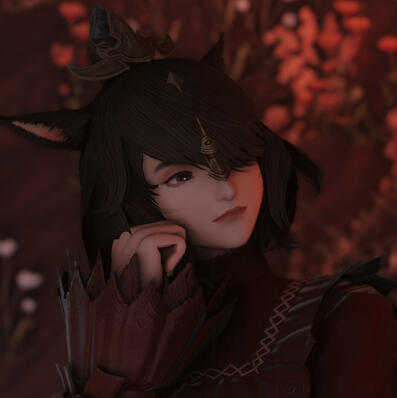
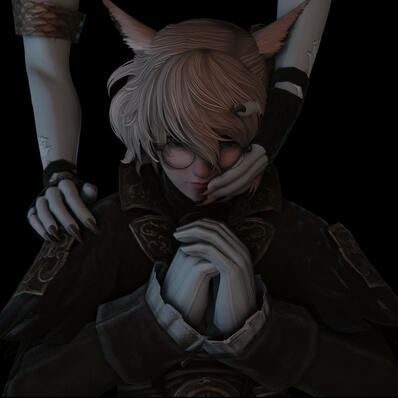
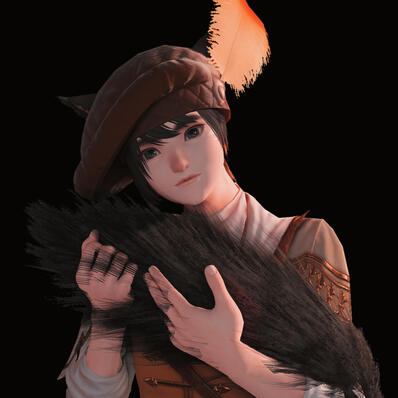
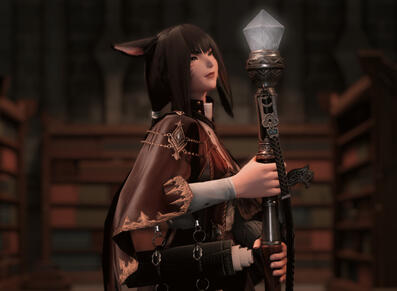
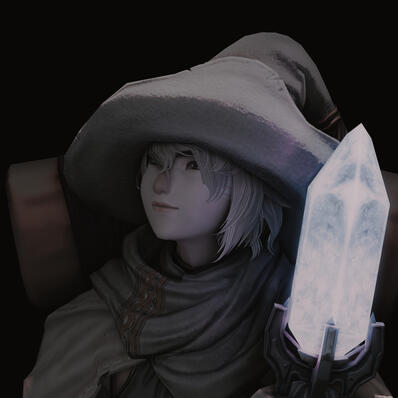
Adalwolf, Emily, Doru, Solomon, Tabitha, Qiqyat. From the Arlwich Highlands in the western foothills of Coerthas to the White Maiden shoreline of the Twelveswood, from the eastern Vylbrandian fishing settlement of Dunpool to the Sharlayan island-colony of Tuhl, the Kokkish ethnic group presents a persistent challenge to ethnographers and anthropologists seeking cultural definition, primarily due to their wide geographic dispersal and an above-average tendency towards cultural assimilation: Kokkish populations frequently adopt local naming conventions in place of their ancestral lexicon, and their traditional practices are often embedded – intentionally or unintentionally – within the dominant cultural frameworks of their host regions.Recent academic consensus, however, has begun tracing their likely point of origin to an archipelago within the Strait of Merlthor. There, the extant island tribes preserve what are regarded as the most unadulterated forms of Kokkish language, ritual practice, culinary tradition, and religious observance – forms notably absent or significantly diluted among their Vylbrandian counterparts. Likewise, the caldera-like sea geography separating the islands of the archipelago is frequently cited as a contributing factor in their early exodus, particularly up through the western riverine corridors of Aldenard: ancient volcanic activity had most likely fragmented the island communities and necessitated their early migrations and subsequent integrations.
Marital Practices & Black-hearted Lovers
“[...] she tried to crawl inside him as gentle as falling snow. Love can have its own ways of biting, though, and he still has the scars left by her eyes.”
Most Kokkish communities practice some form of Tesharic clan-laws. Taken from the Ilaat root teshar, meaning “to knot or braid,” it refers to a set of hierarchical polyconjugal marital practices — a genderless form of polygamy or polyandry whose hierarchical rules concern themselves chiefly with the question of inheritance as a compromise to the predominantly and legislatively monogamous cultures they often find themselves integrated in. As such, there is often little restriction or care towards affection, so long as the core estate, holdings, land, and/or property do not come under threat because of it. Generally-speaking, the one who inherits will be the firstborn of the parent agreed upon, generally between the first and second union-ceremony, and formalised on the third (and final) one. It is rarely contentious who that will be, as who has the largest holding, prestige, or resources is often self-evident.This laissez-faire, almost practical mentality towards love would come as some surprise to many outsiders that have found themselves on the receiving end of Kokkish affection, however, which is markedly far more intense, emotionally-charged, and… toxic than what is considered modern and popularly-practiced among the city-states. It is no accident that the words “love” and “black” are cognates in many Ilaat dialects, as it often tends to sweep through them with an overwhelming and addictive force that has had some scholars suggest a possible link between it and their aetherial responses. Furthermore, there is no end to myths and stories of black-hearted lovers as cultural heroes, humiliating and destroying their love rivals, kidnapping the objects of their affection, and defying the gods to cataclysmic results in the name of their ardour.There’s the sadness, too, of course: at the end of evenings – when all their friends depart, when the project comes to a close, when the silence crowds in – sadness is what remains. As if, after everything else is brushed away, that’s what comes natural to them. Sadness, longing, and obsession. Children of nowhere who never know how to leave well enough alone. Some say they’re cursed.
Metaphysical Ecstasy & the Kokkish Thrill
“It’s in the blood. Matters not for all the makeup and silk, the polished boots or knock-off knight-spurs: they’ll never unknot the wild from their souls.”
Commonly referred to semi-academically as the ‘Kokkish Thrill,’ the most obvious physiological difference that separates the Kokkish from Keepers and Seekers are their intense relationships with aether, which can produce an increased sense of euphoria comparable to hours of spiritual ecstasy or even moderate doses of opium – and, like opium, it has been shown to be addictive, and thus ethically-inhibiting. Naturally, this has informed several aspects of Kokkish culture, most notably their religious sectors, which incorporate vast pantheons of spirits and extensive occult, aethero-arcane rituals that often utilise mythopoetic-charged summoning practices.
Gender & A Magus’ Subtle Puberty
Fully-clothed in androgynous attire and style, it would be hard to distinguish between pure Kokkish male and female adults due to the low range of visual secondary sex characteristics that present itself during puberty. Certainly, females experience a widening of hips and enlargement of breast tissue, but beyond this gendered signs are modest, easily overlooked, and not exclusive to one or the other. Instead, their body focuses far more on internal mechanisms, with special attention given to an abnormally high metabolism to support what seems to be its central component: maturing the exceedingly abundant number of aetherial glands throughout their body. Due to this, along with one’s usual ‘catastrophic’ range of emotions during this tender stage in one’s life, Kokkish youths often have to deal with and learn how to control a rapidly developing, abnormally high, and often runaway capacity for sorcery.
Broken Oaths & Busted Stars
“They say they owe devils of their own making a due.”
You can take a bureaucrat from the Isle of Tuhl, a fishwife from Dunpool, and a trapper from Arlwich, and they’ll all agree on the same thing: better to let a lord flay you than to betray an oath – which is to say one formalised in a ceremony believed to be bound by their gods. So urgent is this sense of fear, that they tend to act on par with a geas, like they all know what happens if they betray it – in their bones.And there's the sadness, too, at the end of evenings – when all the friends depart, when the project comes to a close, when the silence crowds in – sadness is what remains. As if, after everything else is brushed away, that’s what comes natural to them: sadness, longing, and obsession. Children of nowhere who never know how to leave well enough alone. Some say they’re cursed.
Chitin, Caldere, Cuisine!
[ wip, and this list of cuisine is found predominantly in the east vylbrandian / strait of merlthor groups ]Screamer Clams in Ironroot Broth: fermented clams that emit a shrill whistle when steamed in its traditional thick, rusty, ironroot bark-flavoured broth. It's prized by augurs who (somewhat jokingly) believe the clams "scream out omens" at the dinner table. Additionally, a popular choice to serve to guests for show.Marrowmilk Porridge with Whisper-Spice: porridge thickened with pale marrowmilk tapped from hollowbone trees, flavored with a rare spice that induces auditory hallucinations. Served at funerary feasts and comparably sombre functions.Bloodfruit and Ashmeat Tart: a dense, savory-sweet tart made from a thick-skinned fruit that bleeds red sap and smoked meat preserved in a special blend of wood ash and bitter herbs. Known for its earthy, iron-rich flavor.Gilded Scarab Carpaccio: thin-sliced meat from the thorax of the blue-horned island scarab (the size of a melon), marinated in citrus brine and dusted with powdered black salt. Its exoskeletal platelets are often served alongside as edible “chips,” lacquered in honey-vinegar glaze. It's considered a delicacy reserved for weddings... and solar eclipses.Duskmoth Custard in Spine-Cut Shell: a dessert dish for nobles and ambitious conversos. Creamy dusk-moth larvae custard is flavoured with dark citrus and faint venom-distillate, creating a sharp, thrilling buzz in the mouth. Served in the split-back of a husk-beetle; the presentation mimics a wound with its cracked shell and oozing center.
Offshoots & Subgroups
Ishaasi: atavistic ethnic group mostly found in Vylbrand & the Strait of MerlthorMerovecht: populates the northern riverine corridor between Coerthas and Dravania; Arlwich Highlands, Hochbern, and Sharlayan miqo’teKivalt: populates the riverine corridor of the White Maiden heartland
The Drowning Guildmasters
of Bellegrada
Once a Vylbrandian principality spanning the island city-states and shores of the eastern Sellsword Coast (so named for the many mercenaries drawn there by its proximity to Aldenard, where 'oh, there's always some war being fought on the mainland'), the Kingdom of Bellegrada was torn apart by a bitter war for succession that left it unable to impose authority over its neighbours. In its modern form, however, the seven districts of the sprawling, seaside metropolis and the Signoria of Guildmasters that rules over it have regained some level of prosperity, and host all manner of trade by ship or cart, even as rising water levels claim precious inches every decade.
The Seven Quarters
quartiere stranero (“stranero”, “foreign quarter”)
The Subura, or “lower city” is a man-made region of the city composed of foundations built directly in the water and criss-crossed by canals. This area encompasses the city’s geographically lowest, economically poorest, and most populous districts: the Quartiere Stranero and Vyleporta. The poorest of the two, the Stranero was historically manufactured as a ghetto for Kokkish migrants from the islands, but today acts as a more general slum beset by rampant crime and poverty. It is home to several ethnic 'conclaves' where dispossessed and marginalised peoples group together into collectivist communes for security against the poorly-enforced criminal activity in the district.
insula struma (“the plumes”, “the [gibbeting] gardens”)
A sea-stack centered in the Struma Harbour, the Insula Struma is home to both the Piazza della Bacciana (the city’s most iconic market square) and the forward castle which overlooks the sea. The quarter is referred to as “the Plumes” by the common folk due to its high concentration of soldiers (the Casavinieri, "house guard") which are colloquially referred to as “Pigeons” for the bright plumage they wear in their hats and helmets and because “they’re everywhere, they’re useless, and they tend to shit on everything.” A less common term for the district is the “Gibbeting Gardens” due to the castle’s prison attachment and its field of gibbets and gallows which overlook the bay.
esquiliera (“the drowned city”, “over the wall”)
Bellegrada is known as the Jewel of the Sellsword Coast and even Esquiliera, the partially submerged district now known as the Drowned City, is not without a morbid beauty of dying or dead splendor. Once a district for the wealthy’s summer and seaside homes, the rising water has made it mostly unlivable with only squatters calling it home. It is said that there are many lost riches to still be found in the submerged estates, but when the tide goes out, with nothing but the looming Sea Wall to oversee its change into a hotbed of crime, there are few who wish to chance their luck at such a gamble.
altelario (“northern quarter”, “over the river”)
Considered the less beloved brother of the Casacallino Bends, Altelario mostly hosts craftsmen who occupy a respectable but less renowned rung of society than its southern counterparts across the Struma. It is often known as the Horseshoe for the shape of the river it sits on as well as its population of agrarian blacksmiths (on account of its closeness to the southwestern gate where most of the region’s rural folk come through).
.
vyleporta (“the docks”)
Unlike the Stranero, the Vyleporta is the half of the Subura that the city watch has a vested interest in maintaining some level of order due to the important role it plays in the region’s economy. Due to the city's size and its eastern-shore proximity to Aldenard, it is a symbolic “Port to Vylbrand,” sprawling with wharves, warehouses, and loading docks, peopled by sailors and sellswords speaking a dozen different tongues at any given time while labourers hustle cargo between ships or onto carts. It is a place rich with industry and poor in niceties.
montepalacio (“the mount”, “the dovecote”)
Montepalacio is the most affluent quarter in the city, hosting the Gonfaloniere’s palace, the Assembly Hall of the Signoria, and the richest estates in the city. It is not only towering in a symbolic sense, though, as it has also been built on the tallest hill in the city with the palace itself built on a cliff-face overlooking the harbour and the Insula Struma. Its colloquial, “the Dovecote,” is earned due to its connotations with the nobility ("doves") and the aforementioned guards ("pigeons") who prioritise their security over the poor, with huge attachments safeguarding the Gonfaloniere and the Signoria.
casacallino (“the hills”, “old town”)
Casacallino is the oldest district in the city where migrant people first settled in the hills along the winding banks of the River Struma and the mouth to the ocean. Of course, with the construction of the Subura, the sheer cliffs of Casacallino’s south-end now tower above the poorer districts instead of the sea. It is a quintessentially middle-class suburb, with the lower end of that spectrum - skilled tradesmen and the senselessly lucky - dominating the north-end (“the Bends”) while the more affluent and well-off merchants gawk down at the Subura from the south-end (“the Bluffs”). It is a highlight for most travellers as, although the Piazza has the densest concentration of shops, Casacallino’s sheer size boasts the most in addition to its numerous historical buildings.
the catacombs
Although not a proper district, the catacombs are as much of one as any of its official counterparts. Spidering beneath most of Esquiliera and Casacallino, its network of tunnels and crypts are favoured by the less lawful types of the city who use it as a means of smuggling and discarding. Besides its obvious role of housing the dead, the catacombs do boast another legitimate means for its use: the Undermarket. Those unfamiliar with its labyrinthine and ancient geography are best advised to note venture beyond this, though, for every year more folk end up lost and starved inside it or drowned in one of its submerged sections.
The Signoria of Guildmasters
In Bellegrada, everything moves at the turn of a coin. The Gonfaloniere, the city’s governor, serves a largely ceremonial title while the Signoria leads the city through legislation and extralegal means. A parliamentary body made up of representatives from the city’s many guilds, the Signoria’s power became absolute following Bellegrada’s war of succession and the subsequent weakening of the crown's influence. The guilds maintain this equilibrium by strict adherence to their individual trades and wheelhouses and pass laws almost solely for economic benefit. Although technically several factions (forty-four, to be exact), the Signoria as a whole discuss the city at large and will occasionally defer “jobs” to their Office of Enterprising Citizens. An individual (or group) who wishes to take such jobs will be delegated to one of the Signoria’s ‘handlers’ – bureaucrats who oversee the execution of their tasks.
Guilds of Note
fellowship of innkeepers
Their likeness borne on every tavern, brothel, and coffeehouse, the Fellowship of Innkeepers is the rumoured heart of the criminal underworld. Every secret muttered in ecstasy to a favoured whore and every key to every door to every rented room for a night’s stay passes between their shadowy hands. Of course, in Bellegrada, this remains rumour and hearsay for one will find few people willing to publicly slander men who could slip into their room at the witching hour with nothing but the turn of a lock.
the most watchful order of magists, sorcerers, and spellsmiths
Headquartered at Santa Pieta, the iconic, leaning tower near the city’s center, the Watchful Order oversees arcane happenings in the city. Wizards and the like who fail to register with the guild are disallowed the use magic, and if one casts a spell outside of this they can often expect a not-so-friendly knock on their door.
the luthier’s guild
They’re luthiers. They string violins, right?
the worshipful company of tidewrights
An occupational guild and livery company native to Limsa Lominsa, the Worshipful Company of Tidewrights serves the Vylbrandian populace by licencing and regulating specialised arcanists (known as Tidewrights) who provide a myriad of solutions to seafaring ills: wave-cutters, wind-shapers, seer-like navigators, and otherwise. With their clannish, insular reputation and strange brand of pageantry - oaths, rites, traditions, chanting, and dancing - many of the more modern and secular guilds regard them as eccentric, superstitious, and ritualistic.
the company of merchant coffee-makers
The Coffee-Makers came to Bellegrada about five years ago from Kokkish communities in the southern slopes of the Kapeza Range. Their primary motivation at the moment is to become a recognised guild in the city, but have made an enemy of the Innkeepers who view coffee and coffeehouses as direct competition to their taverns, brothels, and hotels. They refer to them solely as the Kapezin and smear their name through the city by “othering” their goods and culture. So far, the Innkeepers have been successful in staunching their rise to the Signoria, but as of late the Kapezin have found allies in the Guild of Watermen who have been long-standing rivals to the Innkeeper for political dominance in Bellegrada. The Watermen allow the Coffee-Makers to sell their wares on floating coffee houses in the canals where their jurisdiction reigns supreme.
Non-Comprehensive List
Think of this more like a reference-sheet to the kinds of guilds you might find. These are largely not self-invented, but pulled from various sources such as TTRPGs, London livery companies, and medieval guilds.
| Bakers’ Guild | Jesters’ Guild | Coopers’ Guild | Council of Farmer-Grocers |
| Council of Musicians and Choristers | Worshipful Company of Bowyers | Fellowship of Coachmen | Stationers’ Guild |
| Fishmongers' & Fishwives' Cooperative | Guild of Apothecaries, Barbers, and Physicians | Guild of Chandlers & Lamplighters | Guild of Glassblowers & Glaziers |
| Carpenters’, Roofers’, and Plaisterers’ Guild | Vintners’, Distillers’, and Brewers’ Guild | Stablemasters’ and Farriers’ Guild | Guild of Stonecutters, Masons, Potters, and Tile-makers |
| League of Skinners and Tanners | Loyal Order of Street Laborers | Most Careful Order of Skilled Smiths and Metalforgers | Splendid Order of Armorers, Locksmiths, and Finesmiths |
| Most Diligent League of Sail-makers and Cordwainers | Most Excellent Order of Weavers and Dyers | Order of Master Shipwrights | Guild of Trusted Pewterers and Casters |
| Order of Master Tailors, Glovers, and Mercers | Saddlers’ and Harness-makers’ Guild | Scriveners’, Scribes’, and Clerks’ Guild | Solemn Order of Recognized Furriers and Woolmen |
Sellswords for the
Sellsword Coast
For those heavy with coin, Bellegrada, like her coastal neighbours, is home to the greatest mercenaries in the known world. In the markets, condottieri from over a dozen different companies call out to gaudily-dressed merchants and visiting lords in hopes of earning their favour and gold. In amphitheatres, arenas, and platforms made of wooden scaffolding, soldiers of fortune pit their best men against one another to show their skills while veteran commanders draft up contracts with clients. These are killers who care not for the size of your ambition, but for the quality of your coin purse.
fratelli della bande nere
Led by Armas Vanamëlmo, an ex-Kokkish corsair, the Brotherhood of the Black Bands is one of the largest and most prosperous free companies in the Sellsword Coast. Boasting thousands of soldiers of varying skill sets, it was they who repelled the Pavan invasion of Renzia and they who even now still occupy and claim ownership of it. Although Armas’ rule is unrecognised by other political bodies, he claims that Marcio Banchi, the last doge of Renzia, promised his throne upon his death to the Kokkish sellsword should they be successful in their war against Pava. Unfortunately, when he at last passed away two years ago, it surfaced that he had promised that same throne to two other people: a son and a nephew who has since fled to Bellegrada. Armas is rumoured to currently be in Bellegrada as well, looking to make his sovereignty of Renzia recognised in the Signoria’s eyes.
ser john's pavisiers
A company consisting solely of pavise shield-bearers and crossbowmen, Ser John’s Pavisiers are most effective in urban engagements where they turn alleyways into murder-chutes. They are currently contracted by the Crown and Signoria to support their Plumes with the quarantine.
company of the gyve
Although separate from the Plumes, the Gyve works closely with the Gonfaloniere and his soldiers due to being a patriotic, pan-Vylbrandian free company. The company has taken part in several military conflicts on Bellegrada’s side and membership is reserved exclusively to those who have spent the majority of their life on the island and can pass certain “Vylbrandian” tests. Their name and banner, a gyve, alludes to their charter which orders its members to “embrace the honourable shackles of servitude.”
company of the thistle
A Kokkish- and mixed-miqo'te-exclusive mercenary company, they are suspected to also run organised crime in miqo'te neighbourhoods. Although they do not discuss current clients, it is believed that they are under an exclusive contract with a new employer.
the poor fellow-soldiers of corintia
Started by retired, Garlean legionnaires, the Poor Fellow-Soldiers of Corintia began as a way for a handful of dispossessed men and women to support their families through the only way they knew how: war. They have a well-known rivalry with the Gyve who dislikes their occasionally xenophobic treatment of their communities. This rivalry tends to be harmless drinking contests and bar brawls, but has been known to turn into bloody turf wars on occasion. Although technically mercenaries, between military campaigns they are often more affordable and will generally cut deals with civilians whose plight moves them. They value martial honour, order, and compassion.
the order of the abbey of saint bastiano and the brotherhood in tatters
A secretive, religious order of knights from the Vylbrandian breadbaskets. All that is known of their central faith is that it is monotheistic and incorporates fire in its rituals.
the forty-five men-at-arms of tchotskie
They say there were only forty-five of them that held Tchotskie. Scholars often remark it's ignoring some finer points.
The Magocratic Demarchy of Ismyrna
The island of Medzamke is off the northeastern coast of Vylbrand. It's a long, narrow stretch of land that runs north-to-south, and the twin Ashki and Isza Peaks rise out of its northern and southern jungles. Year-round, the island appears as if strangled in an eerie fog, but the locals will tell you that this is owed to great ash-clouds that tumble out from the Twins and creep through the deep and wild woods that sprawl from coast-to-coast.Once, there were Kokkish in the jungles and the mountains. You could see them lingering in the dark of a tree, pale and phosphorescent as ghosts. They looked like moss and time folded into bodies, they say, and their bows were strung from viscera and hammered out of bone. In their place, however, is an emptiness that can never be made right again.Any who have passed in sight of Ismyrna has had to wonder, though: what are jungles and mountains and catfolk to the industrious engine of man? Sailors can see the Planar Nail and the Chamber of Saint Rosta with its many minarets rising out of the water from leagues out, like the ancient Ismyrnans had sought to prove ill any god that said that they were not worthy of heaven. A saszik stands ornate and double-golden-belted and glowering as a pair of non-citizens leave one of their great, arcane academies. Three streets over, marching down the Triumph of Rosta, two fully-armed columns of soldiers come to the end of their patrol, staring each other down for a tense moment before their captains wheel them around and begin hiking back in opposing directions. In the harbour and out in the shallows, face-painted fishwives watch sail-less boats glide cleanly over the water by means of enchantment. A half-cat is begging for coins as a hedge-conjurer bids a troop of faeries to dance.If you traveled through any of the Kokkish islands throughout the Strait of Merlthor on your way here, the ancient academies that make up the city’s skyline would appear all-too-familiar with their tiered balconies not unlike the temple architecture of the miqo’te that once ruled the Strait. Now, though, they stand repurposed into institutions of arcane learning, alight at all hours in practice to the only trade that the city has ever deemed noble: magic.
| Official Name | Demarchist Republic of Ismyrna |
| Government | Military Dictatorship / Demarchist Oligarchy (Magocratic) |
| Demonyms | Ismyrnan, Medzswasian |
| Population | 45% human, 25% lalafell, 20% miqo’te (kokkish), 10% other |
| Dominant Philosophies | Imperialism, jingoism, arcane elitism |
| State Religion | Ismyrnan Sainthood |
| Head of State | Lord-Tyrant Kiamke Zavoi |
| Legislative Body | The Ismyrnan Assembly |
| Territory | Island of Medzamke and surrounding colonies |
| Defense | Navy, arcanima |
| Major Exports | Sugar cane, cocoa, cotton, lumber |
| Keywords | Magocratic, maritime, Athenian democracy |
From God-Kings to Republicans...
According to local belief, the contemporary Ismyrnans were not native to Medzamke, but had instead been brought to the island as devoted and prized servants from somewhere far across the sea, and who had already been trained in magic by their Kokkish masters before they arrived. Together, they’d built Ismyrna, but it had been those slaves who, eventually seeing the greed and corruption of the Kokkish, overthrew and subdued them (some might say ‘enslaved’ or at the very least ‘oppressed,’ though the ruling class tends to think it necessary to ‘keep their wickedness in check’), and elevated the leaders of that revolution to the sainthood of the state’s current religion. This version has been backed up by “irrefutable” evidence and piles of historical testimony – double-, triple-, and quadruple-checked – but it’s no mystery that if there was ever a political body that could outpace the propaganda powerhouse of the Garlean Empire, it would be Ismyrna’s personal brand of academic nationalism, because it’s far easier to convince one to war with their neighbours if those neighbours are decidedly foreign, “inhuman,” and most importantly, lesser than one’s self. Instead, how the Ismyrnans evolved from theocratic servants to the “Demarchist Republic” it claims to be today is a tale of two stories.Limsan historians suggest a simpler narrative: those ‘servants’ were merely the island’s conquered natives mixed with slaves kidnapped from Vylbrandian fishing villages through the Kokkish’s superior spellcraft. Under Kokkish rule, Ismyrna, much like many of the old crumbling ruins in the Strait of Merlthor, would have served exclusively as a holy city dominated by canopy-carving temples and little else, which most of those captured peoples would have been refused entry to. As a deeply-spiritual but insular people, Kokkish sorcerer-priestesses and shamans were known to jealously guard their secrets and would have only permitted very exceptional and trusted individuals to live in their sacred cities, to learn about their personal gods, and to be taught their vaunted wildecraft.Instead, it had been Rosta, a prized apprentice to one of the priestess-kings, who formed the first mystery cult beneath her master’s notice where she taught to the unenlightened in secret. The betrayal (or heresy) was soon discovered and Rosta executed, but certain doors, once open, could not be closed, and from her pupils, more of these sects began to form among their communities. Magic spread like wildfire, and with the edge that it had given the Kokkish now removed, they could not hold their own against their ex-servants’ superior numbers when civil war eventually broke out. The conflict concluded with the Treaty of Ismyrna which, among other things, opened the gates of the holy city, reduced the Kokkish to political equals, reformed the system of government into a quasi-demarchy, and reduced the Kokkish “divines” to sainthood. Over time, the new government, favouring the majority by design, eroded the rights of the Kokkish and left them disenfranchised as second-class citizens.
...And Republicans to Despots
Ismyrnans have had a curious, notoriously-complicated relationship with democracy since the birth of the Demarchist Republic centuries ago. Throughout this time, a statesman has risen to the status of king, premier, president, or equivalent title with near-full executive powers, on average, every thirty to forty years. They owe this trend in large part to their arcane elitist ideals which favours the rule of magic and enshrines arcane excellence at the centre of a deeply-martial culture.Historically, these regimes have been temporary, lasting often no more than five years before the patricians managed to pressure them into leaving or executed them. However, the current Lord-Tyrant Kiamke, who ascended to her custom-created position during a gruelling, decade-long war with the neighbouring island nation of Pava (which was reduced to a puppet-state through a series of treaties by the end), has remained in power for nearly twenty years, shaking the powerhold of even Ismyrna's oldest, most entrenched and elite familes.Throughout her tenure, Kiamke has presided over several significant reforms to the administration of the Ismyrnan state:
provided arcane education, a privilege previously reserved to Ismyrna's voting class of land-owning citizens, to anyone who enters military service
granted voting rights (and citizenship, if applicable) to any who complete at least three years of military service
placed a war minister at the head of the state treasury to ensure sufficient funding for military operations
improved conditions within the Enclaves of St. Vata and strengthened legal protections for Kokkish minorities
Sainthood & Academia for Wizards
Ismyrna’s state religion is comprised of a host of saints that encourage individual growth and personal excellence through modelling the ideals of those saints. It's made up of numerous lesser heroes - from revolution leaders, famous generals, deposers of tyrants, and arcane innovators - and five major ones who, with the exception of Saint Rosta, comprise four important Kokkish leaders at the time of the uprising and who ended up surrendering or being favourable towards them in some way or another. In addition to having one as a personal patron, greater saints are each seen as the patron of an associated arcane university or state-sponsored institution.Their names were most likely translated into their Medzswasian counterparts.
saint rosta & the central government
First among equals, Saint Rosta is credited with the unintentional founding of the Republic for her contribution in the island’s eventual revolution. Her name is given to the Chamber of Saint Rosta, the collection of central, government buildings including the great dome that dominates the city skyline. This structure is the only wonder built in Medzamke following the dissolution of the god-kings, hence its unique, domed style that contrasts the sharp steeples of the ancient, surviving temples.
saint aneska & the oracular order
Sometimes referred to as the “Pater Primus of Medzamke,” Aneska was the sorcerer who led the exodus from their declining mother country to Medzamke’s coasts. She was said to have an otherworldly patience that permitted her to remain in meditation for hours or even days to project her mind into innumerable pathways in the time-flow as well as decipher the cryptic and wild imagery of these visions. Most importantly, instead of using her understanding to consolidate her loyal followers and save her personal powerbase, she invited her peers to follow her from their doomed home, of whom several she rivalled with already and would continue to do so when they arrived once their gratitude waned, which her visions, it is reasoned, would have warned her of.
The Oracular Order of Saint Aneska: A premier institution for the study of divination and soothsaying, the Oracular Order’s iconic seers honour Saint Aneska’s sacrifice by veiling themselves during their studies to symbolise the importance of their station over themselves. Training with the order encourages an uncanny sense of patience, symbolic interpretation, and inner peace. Top graduates go on to be political, economic, and military advisors. Famously the order that Lord-Tyrant Kiamke graduated from, and as a mark of piety to renounce her personal identity in favour of state dedication, continues to wear her veil to this day.
saint zsiminka & the dead
During the reign of the Kokkish matriarchs, Zsiminka was an insignificant figure among her peers. It was only after the dissolution of their regime that she found her niche. A skilled necromancer, she agreed to submit herself to the dreary and hideous state of unlife to keep the nation’s lore and history in addition to maintaining the Ismyrnan catacombs.
The Sacred Fellowship of Saint Zsiminka the Elder: Unlike most arcane organisations within Ismyrna who practice a rather laissez-faire approach to learning and allow any voting class citizen to attend, the Sacred Fellowship is a hereditary order where each member is part of a long family tradition dating back to the acolytes of Saint Zsiminka. Of all the saints, Zsiminka is (allegedly) the sole one that still lives (though few, if any, ever see her, if so), and she and the descendants of her acolytes act as attendants to the vast necropolis that stretches throughout the city’s underground. Although not as strict as most countries with regards to necromancy, Ismyrna still restricts the practice of most magics dealing with death and unlife to the families within the Fellowship, who also act as a partial “police force” to crimes regarding the misuse of necromancy.
.
saint bokori & his infernal nail
Bokori was the most skilled conjurer of the Old Ways. According to Ismyrnan history, during their most prosperous, pre-republic golden age, a devil of great power and influence offered to elevate him above his peers and in exchange he would be expected to use this power to impose worship of the infernal entity onto his subjects. Not only did Bokori refuse, he ensured that the devil would not make this offer to any of his colleagues by banishing him from the plane and constructing the Planar Nail.
The Academy of Saint Bokori: The Academy focuses its students on extraplanar and conjuration studies while modelling itself off of Saint Bokori’s Laws of Ethical Extraplanar Sciences that discourages conjurers from being misled or beguiled into servitude with unnatural forces or for taking what many consider an “easy way out” with regards to pact-related agreements. The Academy teaches in the ancient Planar Nail constructed by Bokori.
saint vata & the kokkish enclaves
Although a prolific slave-owner in his own right, Vata was known to advocate for the Kokkish servants of his peers, believing that improved conditions would increase the productivity of their workforce. Due to this, the enclaves that act as reservations for the Kokkish have been named after him, a fact that many Kokkish consider a slap in the face given that Vata’s efforts had selfish intentions, never pushed for full emancipation, and has done little to change the current abject squalor of the contemporary enclaves.
Enclaves of Saint Vata: Medzwasian humans remain Ismyrna’s most abundant ethnic group while over a dozen other species and groups still maintain sizeable populations in the city. Although this presents an image of cosmopolitanism, its aristocratic “voting class” is Medzwasian almost without exception. Following these humans and lalafell, Kokkish and half-Kokkish miqo'te occupy a subordinate role that retains certain rights not offered to non-citizens, but still has reduced cultural, economic, and legal status. Most of the Kokkish community lives in one of the three Enclaves of Saint Vata (northwestern, western, and southeastern respectively) invariably located near the outer walls of the city (with the northwestern one beyond the walls completely). Enclave conditions are poor at best with little state funding provided to upkeep its increasing demands. This increases crime and poverty in the districts which in turn fuels racial stereotypes towards them as being lawless, crooked, or disreputable. Colloquially, these enclaves are referred to as “Vata’s Hen Houses” (or just “hen houses”) due to their shanty town squalor.
Sidebar: The Planar Nail
For hundreds of years, the Planar Nail has served Ismyrna as both a premier learning institution of conjuration, and as a rather useful extraplanar security deterrent.Unfortunately, it also looks like the product of an architect who’d had one too many drinks: a narrow, lead-coated tower built at an unmistakable slant with hundreds, if not thousands, of small grooves, dips, and holes threading and exiting shallowly through the exterior (as if worms had taken it to dinner for the last several centuries), and producing a truly awful cacophony whenever a strong enough wind picks up and screams through these countless cavities. Although it must be even more awful to study there, though, this shrill whistling produces a frequency that hijacks stray, extraplanar energy and funnels it through its core, referred to as Bokori’s Prism (or jocularly 'Prison'), and scatters the energy into an available containment cell within the tower. If none are available, the aether is broken down (and all that implies) and stored in a reservoir.Its narrow, unaccommodating size doesn't prevent its function as an academy, either. Stepping through the front door into the vast foyer reveals, even to an amateur student of conjuration, that the many chambers “inside” exist in a collection of micro-planes, making it both more dimensionally malleable, and therefore easier to commune with extraplanar forces and test associated concepts, but also... much bigger on the inside.